
 By Carter Davis
Understanding cannabis regulations in your state is very important. These regulations are different in each state and affect how you can use, sell, or grow cannabis. Right now, 24 states and Washington, D.C. allow recreational marijuana. Meanwhile, 17 states only allow it for medical use. In total, 41 states have some cannabis regulations. These rules can change what you can do and what you must follow.
Knowing local cannabis regulations helps you deal with growing, making, and selling cannabis. It also keeps your rights safe in property and business matters related to cannabis.
- Learn your state’s cannabis laws. Each state has its own rules for using, selling, and growing cannabis.
- Keep up with changes in cannabis rules. Laws can change fast, which can affect your rights and duties.
- Understand the difference between medical and recreational cannabis. Medical users usually have higher limits and lower taxes.
- Look at local resources for cannabis information. Use state databases and reports to stay updated on cannabis laws.
Cannabis legalization in the U.S. has a complicated past. Here are some important events:
- In 1930, the Federal Bureau of Narcotics was created to control cannabis use.
- The Marihuana Tax Act was passed in 1937. It made strict rules that banned cannabis.
- The 1970s began the movement to decriminalize cannabis, starting with Oregon in 1973.
- California allowed medical cannabis in 1996. This helped other states to do the same.
- In 2012, Washington and Colorado were the first states to allow recreational cannabis. This was a big change in laws.
Public support for legalization has changed over time. In 1969, only 12% of Americans wanted legalization. By 1977, that number grew to 28%. Now, two-thirds of Americans think marijuana should be legal.
As of 2024, cannabis legalization is still changing in the U.S. Many states have made new laws or ballot measures recently. For example:
- Michigan expects sales to hit $3 billion in 2023, with 700 licensed stores.
- Maryland allowed adult-use cannabis on July 1, 2023, expecting market growth.
- Minnesota also legalized adult-use cannabis in May 2023, with sales starting in January 2025.
Some states are thinking about new laws. Florida plans to put a recreational use vote on the 2024 ballot. Idaho is trying to allow medical cannabis through a 2024 ballot measure.
These trends show that cannabis laws are changing quickly. It is important to stay updated about these changes for both consumers and businesses.
California is a leader in cannabis laws. The state allowed medical cannabis in 1996 and recreational use in 2016. Here’s a quick look at the current laws:
| Aspect | Details |
|---|---|
| Medical Use | Started on November 6, 1996 |
| Possession Limit | Up to 8 ounces unless needed for medical reasons |
| Recreational Use | Started on November 9, 2016 |
| Age Restriction | People under 21 cannot buy, have, or use cannabis |
| Possession Limits | Up to 28.5 grams of regular cannabis and up to 8 grams of concentrated cannabis |
| Effective Date | January 1, 2018 |
California has a detailed cannabis business licensing system. It includes both medical and recreational use. However, high taxes and local rules can make it hard for businesses.
Colorado was the first state to allow recreational cannabis in 2012. The state has clear rules for personal use and businesses. Here are some key points:
- Colorado has a 15% tax on wholesale cannabis products based on market rates.
- There is also a 15% tax on retail cannabis sales.
- Residents over 21 can buy up to 1 ounce of marijuana.
- The limit for marijuana concentrate is 8 grams.
- You can possess up to 2 ounces of ‘retail’ marijuana from licensed stores.
The cannabis tax money helps pay for public services. For example, 71.85% of the money goes to health education and prevention programs.
| Revenue Allocation | Percentage | Purpose |
|---|---|---|
| Local Governments | 10% | Based on cannabis sales in each city/county |
| Cannabis Tax Cash Fund | 71.85% | For health education, enforcement, and prevention programs |
| General Fund | 15.56% | General state funding |
| Public School Fund | 12.59% | Given to all school districts for educational programs |
Oregon has some of the most advanced cannabis laws in the country. You can have up to 24 ounces of cannabis. The state allows home growing, with up to 18 seedlings and 6 mature plants. Here’s how Oregon compares to nearby states:
| State | Possession Limit | Home Cultivation Allowance | Medical Dispensaries |
|---|---|---|---|
| Oregon | Up to 24 ounces | Up to 18 seedlings and 6 mature plants (24 total) | State-licensed dispensaries available |
| Washington | Up to 24 ounces | Up to 15 cannabis plants | State-licensed dispensaries available |
| Ohio | Up to a 90-day supply | No homegrown cultivation allowed | Medical cannabis dispensaries licensed throughout the state |
| Rhode Island | Up to 2.5 ounces | Up to 12 cannabis plants | Licensed “Compassion Centers” that grow and sell medical cannabis |
| Utah | Up to 2 ounces | Up to 6 plants if no dispensary within 100 miles | Five medical dispensaries allowed |
| Vermont | Up to 2 ounces | Up to 2 mature plants or 7 immature plants (9 total) | No more than five dispensaries unless needed |
New York legalized cannabis on March 31, 2021. The state allows adults 21 and older to have up to three ounces of cannabis. Here are some important rules:
| Aspect | Details |
|---|---|
| Possession Limit | Up to 3 ounces of marijuana and up to 24 grams of marijuana concentrate for adults 21+ |
| Legalization Date | March 31, 2021 |
| Age Requirement | Must be at least 21 years old |
| Usage Restrictions | Cannot drive under the influence; cannot smoke in places where tobacco smoking is banned |
| Law Enforcement | Smelling marijuana alone is not enough for a search |
New York also focuses on fairness in its cannabis laws. The state gives 50% of all cannabis licenses to social equity applicants, including those from communities hurt by past laws.
Texas has strict cannabis laws. Medical use is allowed under the Compassionate Use Program, but recreational use is still illegal. Here’s a quick overview:
| Aspect | Status |
|---|---|
| Medical Use | Allowed under the Compassionate Use Program |
| Recreational Use | Still illegal |
| Federal Classification | Marijuana is a controlled substance under federal law |
| Texas Classification | Marijuana is a controlled substance under Texas law |
| THC Penalties | Classified in penalty group 2 for criminal penalties |
Florida has a medical marijuana program run by the Florida Department of Health. Here are the main rules:
- Patients must have specific medical conditions to get medical marijuana, like cancer, epilepsy, PTSD, and chronic pain.
- Adult-use marijuana is not legal in Florida.
| Requirement | Description |
|---|---|
| Registration Card | Must have the patient/legal representative’s name, address, date of birth, and a recent photo. |
| Unique Identifier | Each cardholder must have a unique number linked to the registry. |
| Performance Bond | Applicants must post a $5 million bond, reduced to $2 million after serving 1,000 patients. |
| Background Screening | All owners and managers must pass a level 2 background check. |
| Compliance Violations | Fines up to $10,000 for various violations, including endangering patient safety and fraud. |
| Biennial Renewal | Approval must be renewed every two years if requirements are met. |
Many other states have different cannabis laws. Some allow only medical use, while others have legalized recreational use. Always check your local laws to stay compliant.
The amount of cannabis you can have changes by state. It also depends on if you use it for medical or recreational reasons. States usually set limits on how much you can legally keep. Here’s a quick look at common possession limits:
| Product Type | State Range (Flower) | State Range (Concentrate) |
|---|---|---|
| Flower | 1.0 – 2.5 ounces | N/A |
| Concentrate | N/A | 3.5 – 15.0 grams |
If you use cannabis for medical reasons, you can often have more than recreational users. For example, medical users can have between 1.5 to 762.05 grams of pure THC each month. Recreational users usually have lower limits. This can change how much cannabis you can get and use.
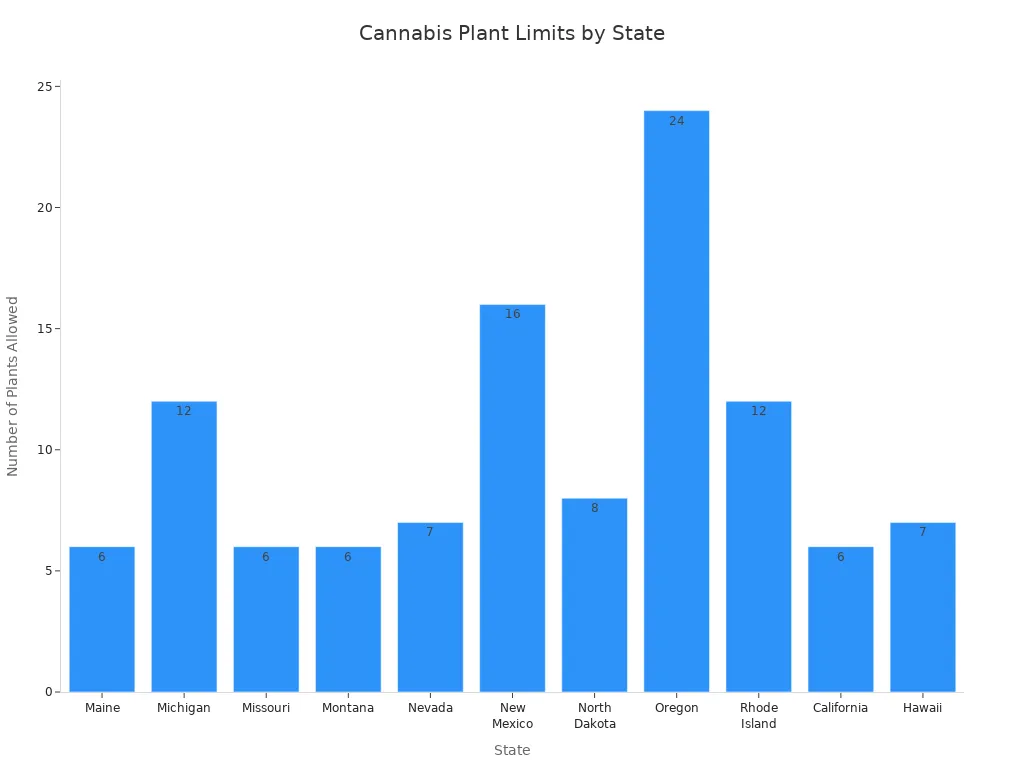
Laws about growing cannabis are very different in each state. Some states let you grow cannabis at home, while others do not. Here’s a table showing how many plants you can grow in different states:
| State | Number of Plants Allowed | Mature Plants Allowed |
|---|---|---|
| Maine | 6 | 3 |
| Michigan | 12 | N/A |
| Missouri | 6 | N/A |
| Montana | 6 | N/A |
| Nevada | 7 | 3 |
| New Mexico | 16 | 4 |
| North Dakota | 8 | N/A |
| Oregon | 24 | 6 |
| Rhode Island | 12 | N/A |
| California | 6 | N/A |
When it comes to growing cannabis, medical programs often have different rules than recreational ones. Medical users may have fewer limits and can sometimes grow more plants. Here’s a comparison of growing laws:
| Aspect | Medical Cannabis Programs | Recreational Cannabis Programs |
|---|---|---|
| Patient Requirements | Must have a qualifying condition and doctor’s recommendation | No qualifying condition required |
| Registration | Patients must register with state-run systems | No registration required for consumers |
| Taxation | Often lower or no tax on medical products | Higher taxes on recreational products |
| Potency | Can have higher potency limits in some states | Generally lower potency limits |
| Product Restrictions | Stricter limits in some states (e.g., Alabama) | More product variety and fewer restrictions |
It’s important to know the differences between medical and recreational cannabis use. Medical cannabis is usually given for certain health problems. You need a qualifying condition and a doctor’s note to get it. Recreational cannabis is available to anyone over the legal age without a prescription.
Medical cannabis programs often give patients more benefits, like higher possession limits and lower taxes. Recreational programs aim to give access to more people, which can lead to more product choices but may cost more.
Cannabis taxes are very different in each state. States use the tax money in different ways. Here are some important facts about taxes:
- States often give some tax money to local governments and schools.
- Some states pay for programs like youth surveys and mental health services.
- The money usually pays for running cannabis programs first.
| State | State Tax Structure (Excise & Retail) | Additional Local Taxes Allowed? |
|---|---|---|
| Colorado | 15% excise tax on wholesale; 15% retail sales tax | Yes, counties and cities can add |
| Washington | 37% excise tax on retail sales; 6.75% retail sales tax | Not specified |
| Massachusetts | 10.75% excise tax on retail sales; 6.25% retail sales tax | Yes, counties and cities can add |
| Missouri | 6% excise tax on retail sales | Yes, counties and cities can add |
| Connecticut | 6.35% retail sales tax; excise taxes based on THC content (varies by product type) | 3% city tax on retail sales |
This table shows how cannabis taxes differ in states with legal markets.
Social equity programs try to fix past unfairness in cannabis laws. These programs help people from communities hurt by old cannabis rules. Here are some common parts:
- Many states, like California and New Jersey, save some licenses for minority applicants.
- Programs often offer money help, like lower fees or loans, to start new businesses.
- Training and business help are usually given to support new cannabis businesses.
For example, Washington State’s E2SHB 2870 law creates a social equity program. It gives priority to some license applicants. This helps make the cannabis industry fairer.
Rules about using cannabis in public are very different. Some states allow use in special places. Others do not allow it at all. Here are some general rules:
- Many states do not allow cannabis use in public, like tobacco laws.
- Some states allow use in private homes or licensed places.
- Delivery services for cannabis are growing. They let people get products at home.
Knowing these special state rules helps you understand cannabis laws better.
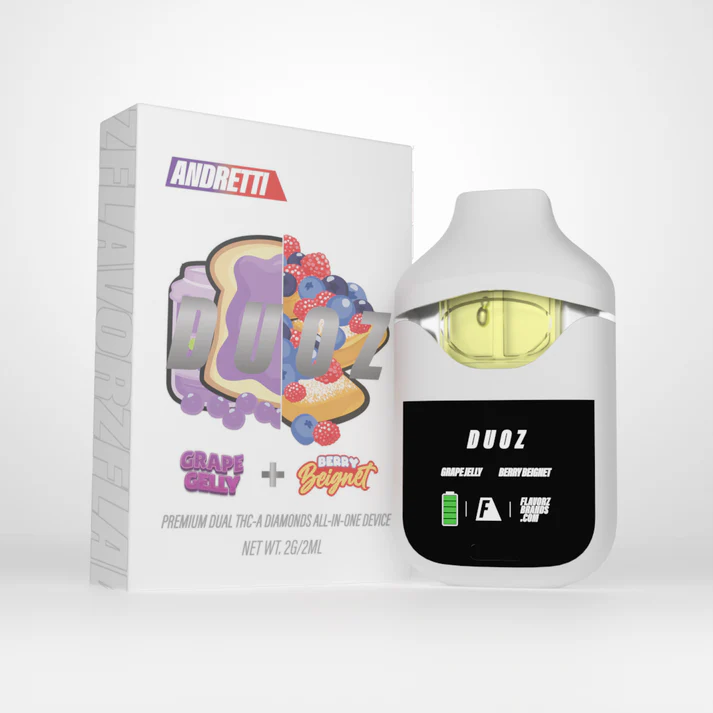
FLAVORZ wants to give you great cannabis products. The brand focuses on being clear about what you are consuming. FLAVORZ follows all state rules, making sure they stay compliant. This promise helps you feel good about your choices.
DUOZ is a flexible product for personal and professional use. It has cool features that make it easy and dependable. Here are some important facts about DUOZ:
- Quality Materials: DUOZ is made with strong materials for lasting use.
- Safety Features: The product has smart safety tools to keep users safe.
- Compliance: DUOZ follows state rules by making sure all parts are legal under the 2018 Farm Bill.
This means you can use DUOZ without worrying about breaking any laws.
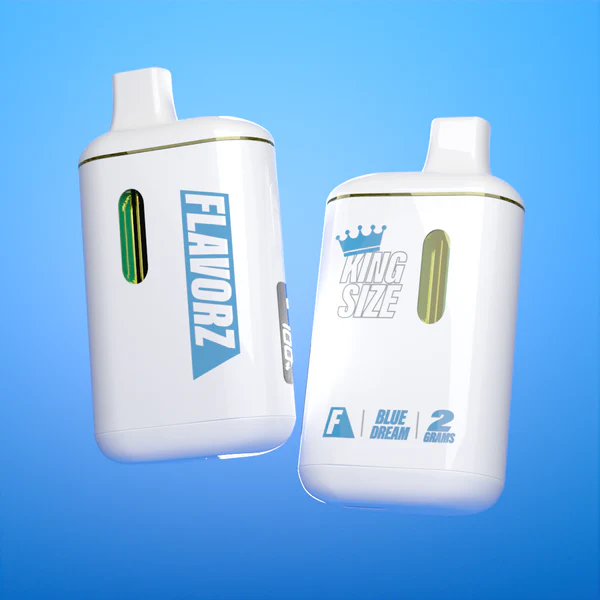
Kingsize is another great product from FLAVORZ. It mixes usefulness with style, making it a favorite among users. Here’s what you need to know about Kingsize:
- Durable Design: Kingsize is made from high-quality materials for long-lasting use.
- User-Friendly: Its smooth design makes it easy to use, improving your experience.
- Regulatory Compliance: Like DUOZ, Kingsize follows state laws, making sure it has less than 0.03% THCA.
With Kingsize, you can trust a product that matches your values and legal needs.
By choosing FLAVORZ products, you support a brand that cares about quality and following the rules. This promise helps you understand the tricky world of cannabis with confidence.
It is very important to know the cannabis laws in your state. These laws can change often, which affects your rights and duties. Check your local rules to make sure you follow them and avoid problems with the law.
Here are some helpful resources to keep you informed:
| Resource Name | Description | Last Updated | Purpose |
|---|---|---|---|
| State Medical Cannabis Laws | A detailed report that looks closely at medical cannabis laws in different states. | June 27, 2025 | Gives updates on laws and important information about medical cannabis. |
| State Cannabis Legislation Database | A complete and current database that includes cannabis laws in all states and territories. | Continuously updated | Helps users track cannabis laws that have been passed across the U.S. |
| Cannabis Overview | A report that summarizes legalization and other cannabis policies. | June 20, 2024 | Offers a summary of cannabis legalization and policy trends. |
By using these resources, you can understand the changing cannabis laws better.
In most states, you must be at least 21 years old to use recreational cannabis. Some states have different rules for medical use. They may allow minors to use it with a prescription.
Laws about growing cannabis at home are different in each state. Some states let you grow cannabis, while others do not. Always check your local rules for details.
The amount of cannabis you can have depends on your state and if you use it for medical or recreational reasons. Usually, limits range from 1 ounce to several ounces.
Yes, cannabis products usually have state and local taxes. Tax rates can be very different, so check your state’s tax rules for more information.
You can usually use cannabis in private places. Public use is often limited, like tobacco laws. Always check local rules before using cannabis in public.
 Anderson Green